
More tabs rarely mean more edge. You already know the feeling: chart open, exchange open, wallet extension blinking, a portfolio app lagging, and a chat full of screenshots that arrived after the move. Performance dies in the gaps between tools—missed alerts, wrong size, forgotten fees, and decisions made on incomplete balances.
Essential digital tools for crypto traders are the ones that tighten that loop: clear charts, reliable execution, honest portfolio data, security controls, research context, and records you can audit. The goal is fewer surprises, not a busier home screen. This guide maps the categories that actually move performance. It is educational, not personalized trading advice. Crypto is volatile and you can lose money.
Charting and Alerting: See Structure Before You Click
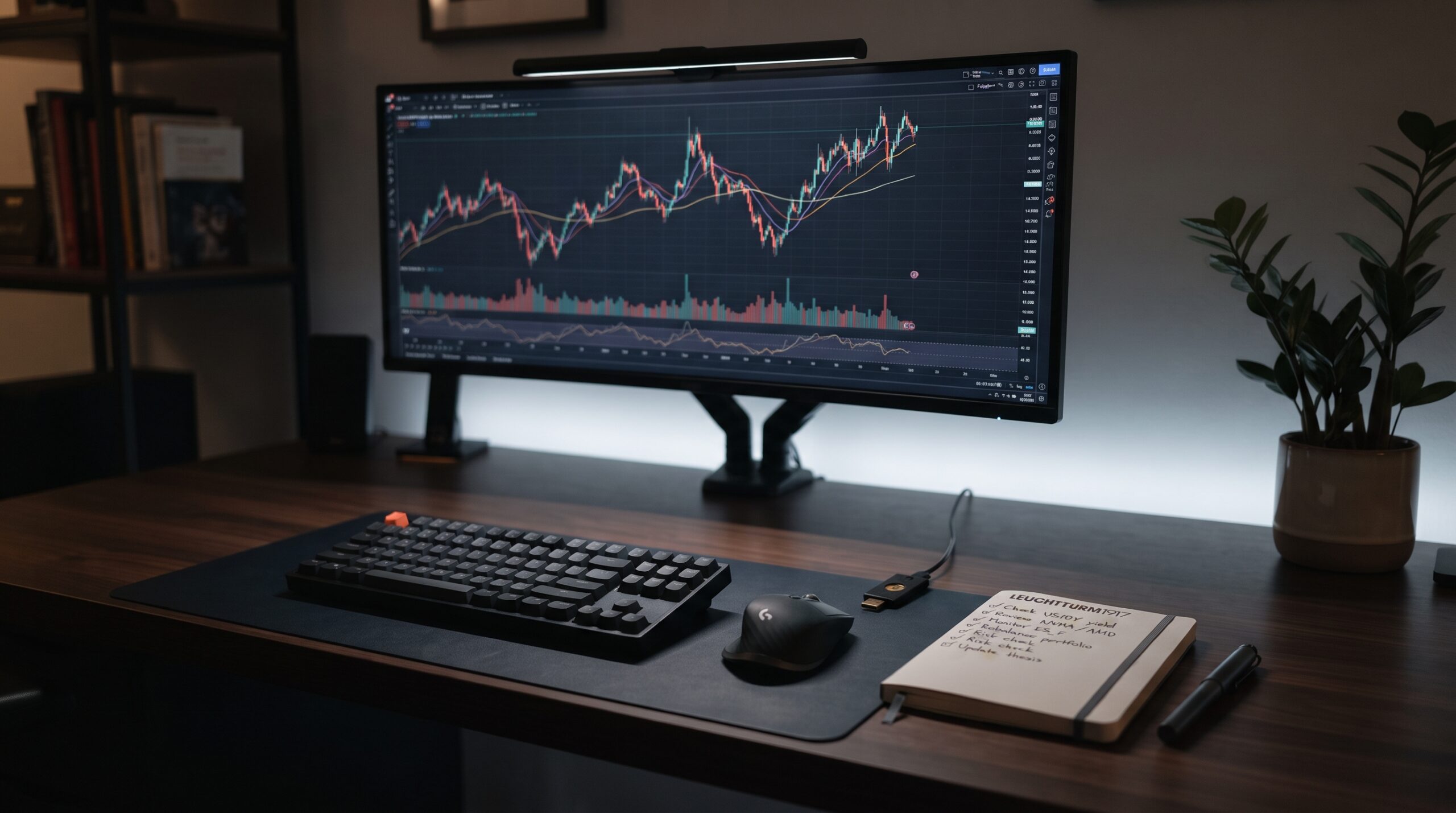
You need a charting workspace that makes higher-time-frame bias obvious and lower-time-frame execution precise. Multi-timeframe layouts, drawing tools, and alerts matter more than collecting fifty indicators. A solid charting platform—TradingView is still the common default for many traders—lets you mark support and resistance once and get notified when price returns while you are away from the desk.
Performance improves when alerts replace obsession. If you only act when price tags planned levels, you stop inventing trades out of boredom. Keep a clean template for your core pairs and resist resetting layout every session. Consistency in how you see the market is part of consistency in how you trade it.
Expert Habit
Save a “bias” layout and an “execution” layout. If they conflict, cut size. Tools should enforce hierarchy, not feed impulse.
Execution Venues and Order Tooling: Where Intent Becomes Risk
A reputable exchange or brokerage interface with stable order types is non-negotiable. You want predictable fills on liquid pairs, transparent fees, and risk controls such as reduce-only or stop orders where available. Advanced order tickets, depth views, and mobile apps that actually work during volatility are part of performance because a correct idea with a failed exit is still a loss.
API access helps systematic traders, yet keys must be locked down—preferably withdrawal-disabled. If you use a multi-exchange terminal, measure whether it reduces errors or merely multiplies connections. Execution software should make the planned trade easier to complete, not easier to overtrade.
Practical Venue Setup
Choose one primary liquid venue and one backup. Document deposit and withdrawal paths before you need them in a rush. Performance includes operational continuity when a single site lags.
Portfolio Trackers: Stop Trading Blind on Exposure
You cannot manage risk if you do not know your true exposure across wallets and exchanges. Portfolio trackers sync balances, price positions, and show when one asset has quietly become most of your risk. Tools in this category—such as CoinStats and similar aggregators—earn their place when they replace mental math and stale spreadsheets.
Reconcile weekly. APIs lag. Forgotten chain addresses lie by omission. Tag internal transfers so you do not mistake a wallet move for a brilliant trade. Better performance often starts with the humble realization that you were more concentrated than you thought.
What to Display on Purpose
Separate liquid equity from locked positions and margin liabilities. A large number that is half unavailable is not dry powder. Professionals distinguish buying power from headline balance; your tracker should help you do the same.
Security Tools: The Performance Feature Nobody Screenshots
Account takeover ends performance permanently. Hardware security keys, authenticator apps, password managers, and withdrawal allowlists are core trading tools. Bookmark official URLs. Reject “support” chats that message first. Test small withdrawals before large ones when moving to self-custody.
If you hold for longer horizons, cold storage practices matter as much as any chart pattern. Hot wallets for active trading size only. Performance is compounded survival. One phishing event can erase a year of careful entries.
Minimum Security Stack
Unique passwords, hardware-backed 2FA where possible, allowlisted withdrawals, and a written recovery plan stored offline. Boring? Yes. Effective? Also yes.
Research and On-Chain Context: Filter, Don’t Drown
Explorers, analytics dashboards, and market-data sites help you understand liquidity, flows, and narrative backdrops. On-chain analytics platforms can show exchange movements or holder behavior that pure price charts miss. Use them to frame risk around levels you already marked—not as a siren that forces a trade every time a whale moves.
AI assistants can summarize documentation or organize notes. They can also invent false certainty. Verify on primary sources before size goes on. The performance skill in 2026 is filtration: less raw information, more checked inputs.
A Simple Research Rule
One sentence thesis, one invalidation condition, one data source you trust enough to cite in your journal. If you cannot write those three lines, you are browsing, not preparing.
Automation, Journaling, and Tax Records: Close the Loop
Recurring-buy tools and rule-based bots can support disciplined entries when parameters are conservative and capital is capped. They damage performance when they churn fees or run without kill switches. Journaling tools—even a basic notes app with screenshots—improve performance by exposing repeated mistakes. Tax and transaction reporters reduce year-end chaos and reveal the real cost of hyperactive trading.
Export histories regularly. Connect the same accounts you actually use. When you see commissions in aggregate, strategy quality becomes harder to fake. Records are feedback. Feedback is how discretionary traders improve without rewriting history in their heads.
When Not to Automate
If you lack a written rule set, automation will only scale confusion. Earn consistency manually, then automate the boring parts.
Build a Lean Stack and Review It Quarterly
Essential does not mean endless. A practical performance stack looks like this: charting with alerts; one primary execution venue; portfolio tracking; security keys and password management; selective research data; journal plus tax export habit. Add bots or advanced analytics only when a specific strategy requires them.
Every quarter, cancel what you did not open. Confirm API permissions. Re-check recovery methods. Performance tools should shrink decision time and error rate. If a subscription only increases noise, it is not essential—it is clutter with a billing cycle.
Hypothetical Desk Check
Imagine two traders with the same win rate. One knows exposure in ten seconds and respects a daily loss stop enforced by process. The other guesses balances and disables safeguards “just this once.” Over a year, tools plus discipline separate them more than a slightly prettier indicator pack.
FAQ
What digital tools does a crypto trader need most?
Charting with alerts, a reliable execution venue, portfolio tracking, strong security tools, and a system for records and review.
Is a paid charting plan required?
Not always. Many traders start with free tiers and upgrade when they need more alerts, layouts, or indicator capacity.
Do portfolio trackers replace exchange balances?
No. They aggregate and estimate; you should still reconcile with primary sources.
Are trading bots essential?
No. They are optional for rule-based execution and risky without caps, monitoring, and withdrawal-disabled APIs.
How do tools improve performance?
By reducing operational errors, clarifying exposure, enforcing planned entries through alerts, and providing feedback through journals and cost records.
Is this trading advice?
No. It is general education on workflow tools. Cryptocurrency trading can result in total loss.
Performance Is a System, Not a Shortcut
Essential digital tools improve crypto trading performance when they make structure visible, execution reliable, exposure honest, and accounts hard to steal. They fail when they become a substitute for risk limits or a justification for constant activity.
Assemble the lean stack, lock down security, and schedule a weekly reconcile. Then trade your plan with fewer blind spots. Better performance usually looks quieter from the outside—and far more intentional on the inside.


Leave a Reply