
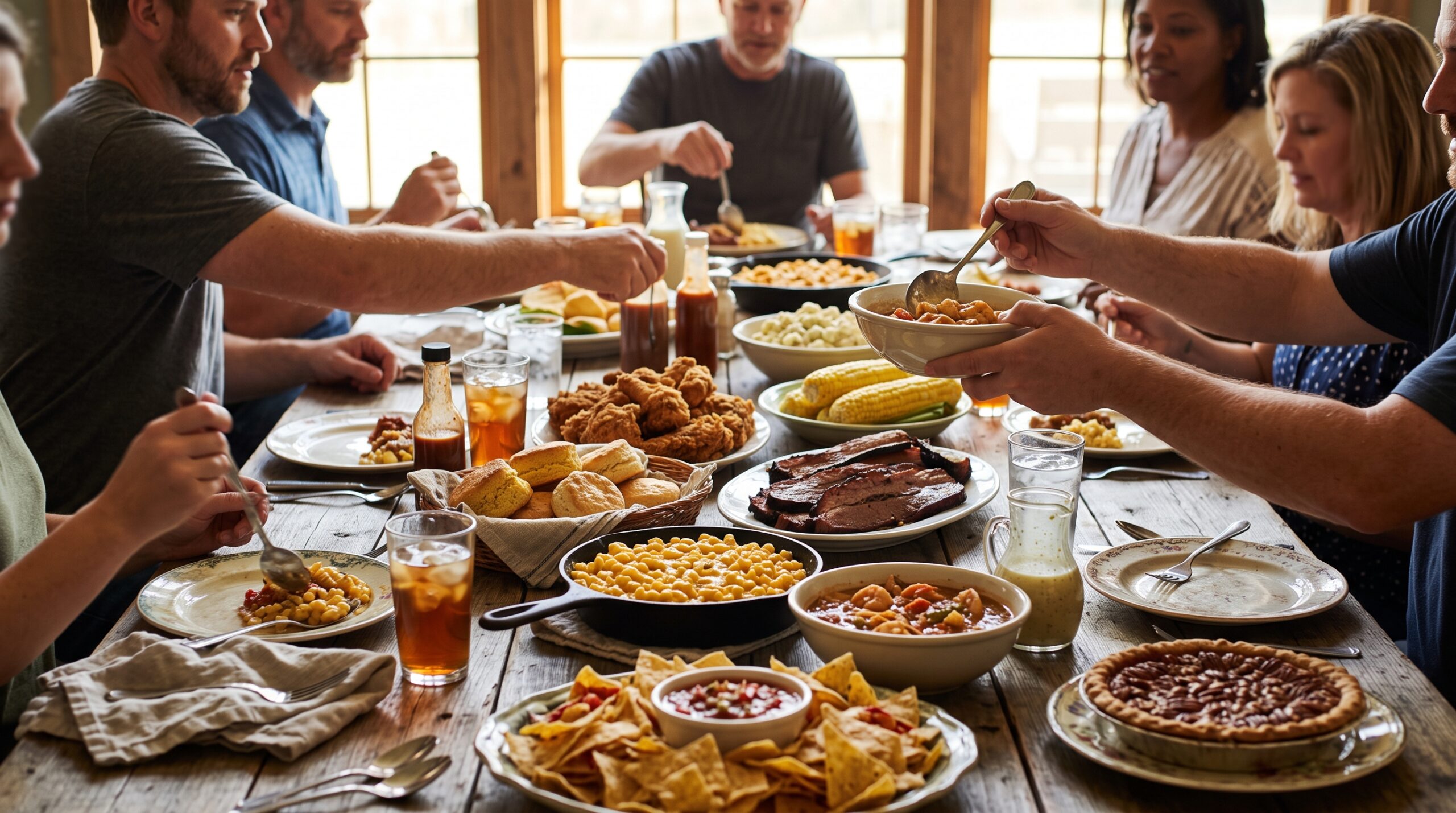
Order “barbecue” in one state and you get a vinegar-stained whole hog. Cross a state line and the same word means beef brisket with a dry rub and a side of argument. Travel farther and someone will tell you both tables are wrong. Food is where American identity stops being a slogan and starts being a plate you can taste.
Regional food traditions continue to shape American identity because they carry migration stories, climate, work rhythms, and pride in a form more durable than many political speeches. You do not have to romanticize the past to see the pattern. From New England clam shacks to Southwest chile pots, local cooking still teaches people who they are—and who their neighbors have been.
Identity Lives in Recipes People Refuse to “Correct”
National fast-food menus flatten difference. Regional traditions resist that flattening on purpose. A Louisiana gumbo, a Minnesota hot dish, a Appalachian soup bean supper, or a Pacific Northwest salmon bake is not trying to be universal. It is trying to be recognizable to the people who grew up with it.
That insistence is cultural work. When families argue about the “right” stuffing, they are not only debating breadcrumbs. They are defending a memory of holidays, scarcity, abundance, and the hands that cooked under pressure. Food becomes a low-stakes stage for high-stakes belonging.
Expert Insight From Community Kitchens
Cooks who feed church halls and union picnics will tell you the recipe card matters less than the expectation. Guests know when a dish has been edited for outsiders. Authenticity, in practice, means continuity with a living group—not a museum label.
Migration Wrote the American Menu in Layers
American regional cooking is rarely “pure.” It is layered. Enslaved African cooks, Indigenous foodways, European immigrant techniques, Asian and Latin American innovations, and local crops met under unequal conditions and still produced cuisines people now claim with pride. The story is complicated because the country is complicated.
Consider the South’s relationship with rice and okra, the Midwest’s embrace of casseroles built for church basements and cold winters, or the way Mexican, Indigenous, and frontier influences braid through Texas and borderland cooking. When you eat regionally, you taste routes of labor and settlement—not a single founding myth.
Hypothetical Family Table
You inherit a “secret” sauce from a grandparent who never wrote it down. You recreate it in a different city and suddenly understand their hometown better than any highway sign explained it. Transmission through taste is still one of the most effective history lessons Americans give each other.
Climate and Landscape Still Set the Rules
Before grocery supply chains blurred seasons, geography dictated the pot. Coastal communities leaned on fish and shellfish. Plains cooking stretched grains, preserved meats, and garden vegetables through hard winters. Desert and high-country traditions prized chile, corn, beans, and methods that worked with heat and scarcity.
Even now, when you can order almost anything online, regional restaurants and home cooks return to what grows nearby or what storage culture taught them to trust. Maple in the Northeast, citrus in Florida, potatoes in Idaho country, and fresh seafood along the coasts are not accidents of marketing. They are landscape expressed as dinner.
Expert Insight on “Local”
Local food movements did not invent regionalism. They rediscovered it. The farmers market is often a modern doorway into older habits of cooking with what the land and water actually provide.
Work, Class, and the Foods of Necessity
Many iconic American dishes began as practical answers to long shifts and tight budgets: beans thickened into stews, lesser cuts transformed by smoke and time, day-old bread turned into dressing or pudding. Necessity produced techniques that later became celebrated cuisine.
That path from survival food to symbol is central to American identity. It lets communities claim dignity in meals once dismissed as poor or provincial. When a city brands itself through a sandwich or a style of barbecue, it elevates working-class ingenuity into public culture—sometimes with tension over who profits from the story.
Hypothetical Diner Counter
A late-night plate after a factory shift does not look like fine dining. Years later, the same flavors appear on a festival poster. The food did not become “real” when tourists arrived. It became visible.
Festivals, Rivalries, and Belonging You Can Taste
Regional identity sharpens through friendly—and not-so-friendly—rivalries. Chili cooks debate beans. Carolina pits debate sauce. New York and Chicago will not settle pizza in your lifetime. These arguments are entertainment, but they also mark membership. Knowing the local rule is a passport.
Food festivals, county fairs, and holiday tables rehearse community each year. Children learn which dish “we” bring. Newcomers learn what to respect. In a mobile country, these rituals remain anchors when job changes and cross-country moves scramble other forms of stability.
Compact Ways to Engage Regional Food Culture
Eat where locals eat, not only where guidebooks point. Ask who taught the cook. Notice crops and seafood on the menu that match the region. Buy a community cookbook from a library sale. Cook one unfamiliar American regional dish at home without “fixing” it first. Curiosity beats collection.
How National Media and Chains Reshape—but Do Not Erase—Regions
Television competitions and social media can turn a local specialty into a national craze, sometimes diluting the original context. Chains borrow spice profiles and sandwich names while standardizing production. Yet regional practice continues in home kitchens, independent restaurants, hunting camps, and church dinners that never trend online.
American identity, in food terms, is not a single melting pot puree. It is a map of persistent differences that still recognize one another as part of a shared country. You can love a national hamburger culture and still know that “barbecue” requires a follow-up question. That double vision is very American.
FAQ
Why do regional food fights feel so personal?
Because recipes often stand in for family, place, and respect. Correcting someone’s tradition can feel like correcting their people.
Are American regional cuisines disappearing?
They change under commercial pressure, but home cooking, independent restaurants, and local festivals keep many traditions active.
Is there one food that represents the United States?
No single dish covers the country’s regional depth. The variety itself is a defining feature.
How can newcomers learn a region’s food culture respectfully?
Start by listening, ordering local specialties without rewriting them, and supporting community cooks and markets.
Do immigrant food traditions count as regional American food?
Yes. Many regional identities are built from immigrant and Indigenous foundations woven into local landscapes and economies over time.
Is this a definitive history of every region?
No. It is a cultural overview meant to highlight patterns, not to exhaust every community’s cuisine.
Follow the Plate to Understand the Place
Regional food traditions continue to shape American identity by turning geography, migration, and work into everyday practice. The country looks more coherent when you notice what people argue about at the table—and more honest when you admit those arguments come from real histories, not branding campaigns.
On your next trip—or your next grocery run—pick one regional dish you only know from hearsay and cook or order it on its own terms. Ask where it comes from. Notice who shows up to eat it. American identity is often debated in abstract language. It is also smoked, simmered, pickled, and passed down—one stubborn regional plate at a time.


Leave a Reply