
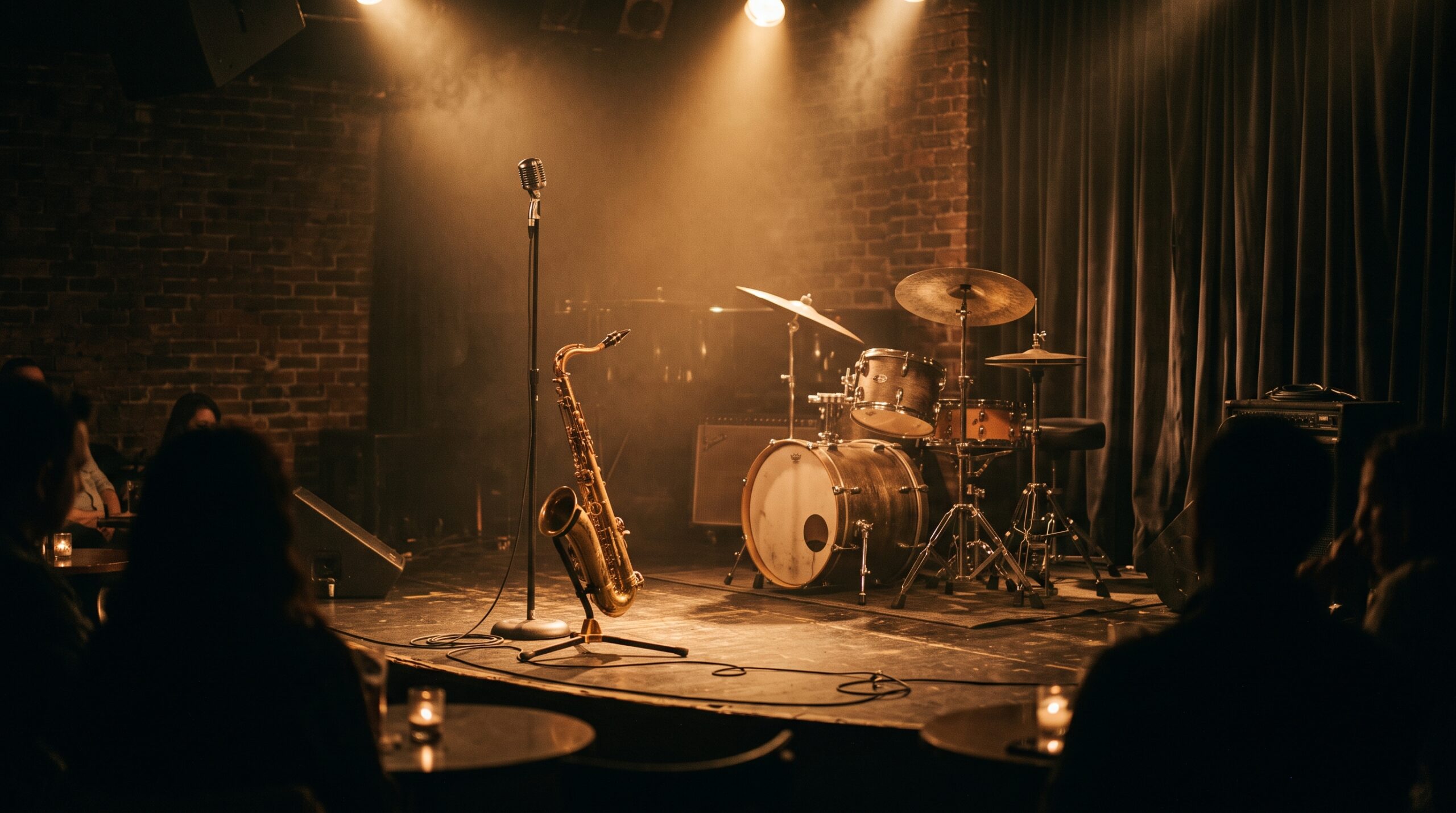
You can go years without putting on a jazz playlist and still hear jazz everywhere. It shows up in a hip-hop sample, a pop bridge that suddenly leans into extended chords, a film score’s muted trumpet, or a bandleader counting off a groove that leaves space for risk. Jazz is not only a genre on a museum wall. It is a set of ideas that keep leaking into other music.
The lasting influence of jazz on global music culture rests on improvisation, swing and groove, blue notes and bent pitch, call-and-response, and a stubborn belief that individual voice matters inside a group. Those tools traveled far beyond early New Orleans and Chicago scenes. They reshaped how musicians invent, collaborate, and listen—on every continent that has a nightlife and a radio.
Jazz Began Local, Then Refused to Stay Put
Jazz grew from African American communities in the United States, drawing on blues, ragtime, spirituals, marching traditions, and the hard facts of segregated entertainment economies. Early innovators turned necessity into form: collective improvisation, hot rhythm, and solo statements that made a single player the story for sixteen bars at a time.
As recordings and touring circuits spread, the music moved faster than any one city’s reputation. Musicians carried styles across the country, then across oceans. What started as a localized cultural practice became an international language with regional accents—exactly the pattern you still hear when a Tokyo trio, a Havana ensemble, and a London club band all claim jazz without sounding identical.
Expert Insight From the Bandstand
Ask working players what they borrowed from jazz and many will not start with a famous album title. They will mention time feel, how to comp behind a soloist, or how to recover when someone takes a chance that almost fails. Influence is often craft before it is fashion.
Improvisation Changed the Job Description of a Musician
Before jazz’s wide impact, many popular traditions prized faithful reproduction of a written or set arrangement. Jazz normalized the idea that a performance could be a real-time composition. The soloist shapes phrases against harmony and rhythm; the rhythm section answers; the form holds while the content changes nightly.
That expectation spilled outward. Rock guitar heroes, free-form jam bands, MC freestyling, and modal experiments in electronic music all echo the jazz premise that mastery includes invention under pressure. Even tightly produced pop often leaves a pocket—a breakdown, a live take, a featured solo—where improvisational energy is allowed to advertise authenticity.
Hypothetical Listening Test
Play a recorded jazz standard from two different nights. Same tune, different choices. The comparison teaches you more about jazz’s global export than any single definition can. The song is a vehicle. The player is the point.
Harmony, Rhythm, and the Sound of Modern Cool
Jazz expanded everyday harmonic vocabulary: extended chords, substitutions, modal approaches, and dissonances that later generations treated as color rather than error. Rhythm sections refined swing, then shattered and rebuilt time with bebop’s velocity, Latin jazz cross-rhythms, fusion’s backbeats, and countless hybrid grooves.
You hear those harmonic and rhythmic habits when R&B adds jazz chords under a vocal, when film composers voice brass with darker extensions, or when lo-fi beatmakers loop a sampled piano voicing that once lived in a club. Jazz trained audiences to accept complexity as pleasure, not only as difficulty.
Expert Insight on “Accessible” Complexity
Jazz influence is not always loud virtuosity. Sometimes it is a drummer’s quiet independence between limbs, or a singer landing just behind the beat. Subtle time and tone choices travel efficiently across genres because they feel good before they get analyzed.
Global Scenes Made Jazz a Two-Way Exchange
Jazz did not only export American forms; it absorbed. Cuban and other Afro-Caribbean rhythms transformed jazz’s pulse. European musicians built distinct free and modern traditions. South African jazz carried political and township histories into international awareness. Brazilian rhythms and song forms conversed with cool and bossa currents. Across Asia and the Middle East, players folded local modes and instruments into jazz frameworks.
This is why “global music culture” is the right frame. Jazz became a diplomatic channel and a local tool at once—used for art, nightlife, protest, prestige education, and street-level experimentation. The lasting influence includes the right to hybridize without asking permission from a single capital.
Compact Listening Paths to Hear the Influence
Compare an early swing orchestra with a bebop small group. Follow a standard into a modal version, then into a hip-hop track that samples a jazz record. Listen to a Latin jazz percussion feature beside a straight-ahead trio. Notice how a contemporary R&B chord progression voices tension like a jazz pianist. Influence becomes obvious when you trace lineages instead of arguing labels.
Education, Industry, and the Prestige of Serious Play
Conservatories and school programs adopted jazz pedagogy: transcription, ensemble listening, theory tied to improvisation. That institutional path placed jazz techniques in the hands of players who later entered pop sessions, Broadway pits, film stages, and electronic production. The industry, meanwhile, used jazz as a symbol of sophistication in advertising and cinema even when sales charts favored other styles.
Prestige can freeze music into reverence. The healthier side of jazz’s influence is the opposite: a living demand that players listen hard, support each other on stage, and treat mistakes as information. Those rehearsal-room values travel into any genre that still depends on human ensemble chemistry.
Hypothetical Studio Session
A producer hires a guitarist for a pop date and asks for “something jazz but not too jazz.” The player understands: richer chords, restrained solo, conversational fills. The brief itself proves the influence. Jazz is the seasoning language even when it is not the meal’s name.
Why Jazz Still Matters When Playlists Forget the Word

Streaming categories can hide jazz while its methods thrive under other tags. Beat makers dig crates full of jazz vinyl. Neo-soul keeps harmonic warmth in the mainstream. Film and game scores still call for improvisers who can emote without lyrics. Clubs worldwide maintain open jam cultures where younger players learn by risking public failure.
The lasting influence of jazz on global music culture is therefore less about chart dominance and more about infrastructure of feeling: freedom within form, individual tone, collective trust. As long as musicians value those principles, jazz remains present—whether the track is labeled jazz or not.
FAQ
Is jazz still evolving or is it historical?
Both. Historical styles are preserved and taught, while new hybrid scenes keep extending the practice worldwide.
Did jazz influence hip-hop?
Yes—through sampling, rhythmic conception, improvisational attitude, and shared roots in African American musical innovation.
Why do some people say jazz is hard to listen to?
Some forms prioritize dense improvisation and unfamiliar harmony. Other jazz is melodic and groove-forward. The word covers a wide spectrum.
Is jazz only American?
Its roots are American and specifically African American, but it has long been a global practice with local dialects.
How can a beginner hear jazz’s influence faster?
Learn a few standards, then seek those chord changes and improvisational habits inside pop, soul, film scores, and sampled beats.
Is this a complete history of jazz?
No. It is a cultural overview of influence pathways, not an exhaustive timeline of every artist and movement.
Listen for the Idea, Not Only the Label
Jazz shaped global music culture by teaching improvisation as a public act, expanding harmony and rhythm, and traveling through a two-way exchange that made local scenes co-authors rather than copies. You do not have to become a discographer to notice the result. You only have to listen for conversation inside the music—players responding to each other in real time.
This week, pick one jazz recording and one non-jazz track you already love. Hunt for shared DNA: a chord color, a swung eighth-note feel, a solo that tells a short story. When you find it, you are hearing why jazz lasts. It did not merely add songs to the catalog. It changed what musicians believe they are allowed to try when the red light is on and the room is listening.


Leave a Reply