
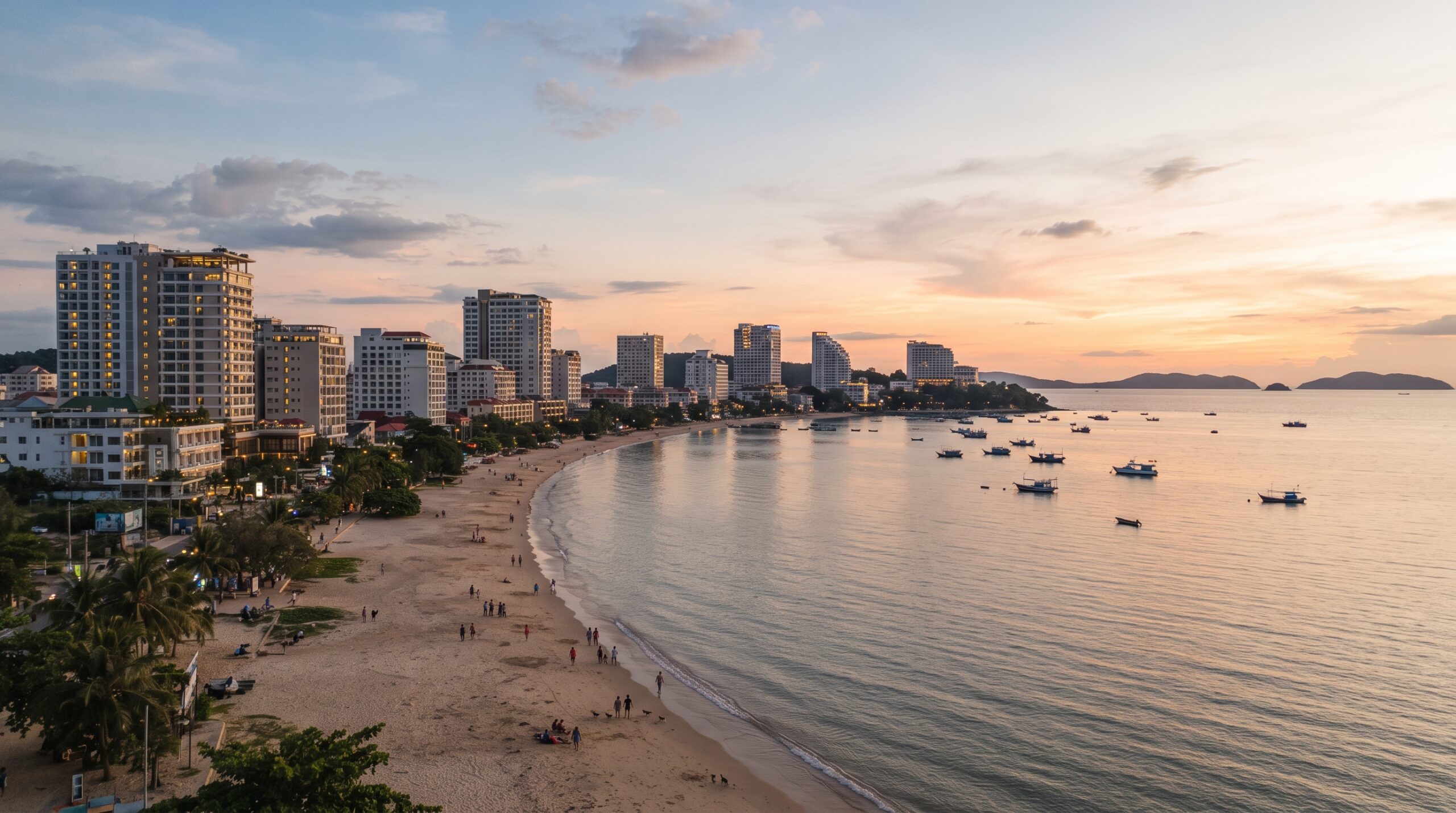
Sihanoukville still carries the memory of a boom that moved faster than the roads could handle. Cranes multiplied. Prices followed capital that was never only about beaches. Then the music stopped—online gambling restrictions, pandemic shock, unfinished towers, and a long stretch of quiet listings. If you held inventory through that period, “recovery” is not a slogan. It is a question about which assets finally find users again.
The real estate market in Sihanoukville shows signs of recovery in 2026, but the rebound is selective. Completed homes near the coast, services, and logistics corridors are steadier than weak inland condos or stalled projects. Port activity, infrastructure work, and a gradual tourism rebuild are supporting demand. Oversupply has not vanished. If you buy, sell, or advise clients here, treat the city as a split market—not a single chart.
From Speculative Spike to a More Ordinary Coastal City
The late-2010s surge pulled in heavy foreign speculation and rapid condo construction. After the correction, many buildings sat incomplete or under-occupied. Residential asking prices in weaker segments fell sharply from peak levels in the years that followed, with market analyses often citing declines in a wide band depending on project quality and location. Rents that once tracked a narrow visitor boom also reset.
What you see now is closer to a working port city with tourism and industrial overlays than a pure casino-adjacent bet. That shift hurts owners who only underwrote short-term speculative exits. It helps buyers who need livable, finished product near employment and the sea. Recovery, in this frame, means absorption and use—not a return to the old peak multiples overnight.
Why “Average Price” Misleads
Citywide averages mix beachfront stock with stranded inland units. Median figures and segment-level reads are more useful. Analysts tracking 2026 conditions have described modest overall residential movement—on the order of low single-digit annual change—while stronger beach pockets outperform ordinary towers. Long days-on-market remain common for average listings, which keeps negotiating power tilted toward serious buyers on non-prime assets.
Where Demand Is Actually Showing Up
The clearer interest sits in completed apartments and homes near Otres, Independence Beach, Sokha, and established coastal strips where tourism and daily services overlap. Units tied to the port-city employment story and practical central locations also hold attention better than isolated mid-rise blocks with weak management. Unfinished projects and buildings with legal or structural question marks still struggle, even when headline prices look “cheap” per square meter.
Tourism recovery matters, yet it is not the only driver. Sihanoukville’s role as Cambodia’s deep-sea port gateway anchors logistics jobs and industrial demand linked to special economic zones. Road and drainage upgrades, airport connectivity, and national infrastructure programs feed a multi-year narrative rather than a one-season flip. When we walk the market with clients, the first filter is simple: can someone live in it, rent it, or operate from it this year without heroic assumptions?
Infrastructure as a Slow Burn, Not a Fireworks Show
Port expansion planning, municipal road and canal works, and corridor links toward Phnom Penh support confidence in the city’s economic function. Effects on housing prices tend to arrive gradually. Buyers who expect overnight double-digit jumps from a single groundbreaking often leave disappointed. Buyers who map commute patterns, flood risk, and service access make fewer unforced errors.
Prices, Rents, and the Oversupply Hangover
Market estimates for 2026 still describe a large stock of vacant or slow-moving residential units left from the construction wave. That inventory caps how fast citywide prices can run, even when prime segments firm up. Reports aimed at investors have placed some secondary and distressed asking levels far below boom-era expectations, while quality completed coastal product commands a clearer premium.
Rents remain well below the fever peak in many pockets, which is painful for leveraged owners and helpful for workers and long-stay tenants. A healthier market needs both: owners who can hold, and occupants who can pay without speculative subsidies. Full absorption of excess stock may take years under cautious scenarios that assume steady but not explosive demand.
What a “Mildly Positive” 12-Month Outlook Means
Segment forecasts circulating in 2026 often sketch flat to slightly positive performance for good completed units, with weaker resale stock still at risk of stagnation or further negotiation pressure. That is recovery language, not boom language. Credit conditions, tourism volatility, and Cambodia’s broader growth tempo will influence whether the mild case holds.
Buyer Playbook: Selectivity Beats Slogan Investing
If you plan to purchase, prioritize completed buildings with clear title pathways, functioning management, and locations you would accept for personal use. Inspect common areas, water pressure, elevators, and reserve funds. Price per square meter only after you price the cost of fixing what the brochure ignores. Compare at least three similar units and speak with existing residents when possible.
Foreign buyers should confirm ownership structures, strata rules, and exit mechanics with qualified local counsel before deposits move. Cambodia’s property regime is navigable with care and unforgiving when rushed. We advise clients to underwrite rental yield on conservative occupancy, not brochure projections copied from 2018. If the deal only works at peak-season fantasy rents, it does not work.
Seller Playbook: Price for the Market You Have
Sellers still quoting boom-era numbers extend days-on-market. Competitive pricing on finished, well-kept units near the beach or employment nodes moves first. Pre-listing repairs, honest condition reports, and flexible completion timelines matter more than glossy adjectives. If your asset is inland, unfinished, or poorly managed, strategy may mean holding, repositioning, or accepting a deeper discount—not waiting for a citywide miracle.
Risks That Have Not Left Town
Oversupply remains the structural weight. Liquidity can be thin outside the best addresses. Currency, tourism shocks, and regional policy noise can delay decisions by foreign capital. Buildings started for a different demand base may never match today’s user needs without conversion or heavy reinvestment. Legal and construction quality variance is wide; cheap can be expensive.
There is also reputational overhang from years when parts of the local economy were associated with illicit online operations and abrupt crackdowns. Formal tourism, port logistics, and compliant services are the durable path. Investors who need that distinction clear in their own risk policy should underwrite accordingly.
A Practical Due-Diligence Sequence
Walk the neighborhood at night and in rain. Verify seller identity and title status through proper channels. Read the management rules and fee history. Stress-test service charges against realistic rents. Keep capital for fit-out and vacancy. Sign nothing in a hurry on a first visit. Sihanoukville rewards patience more than it rewards FOMO.
How Professionals Are Reading the Next Few Years

The constructive base case is gradual normalization: tourism and logistics support demand for livable coastal and workforce housing, while excess speculative stock clears slowly. Prime beach and completed mid-quality product may see low-to-mid single-digit annual gains if conditions cooperate; weaker stock lags. A renewed broad spike like the late-2010s episode is not the central forecast in most sober market notes.
For Cambodia’s secondary economic hub, that path is still valuable. A city that works for port staff, hoteliers, and domestic travelers is more investable long term than a city that only works for short-term speculation. Recovery signs matter because they point to use. Use is what eventually supports price.
Who Should Engage—and Who Should Wait
Owner-occupiers and yield buyers with long horizons can find negotiated entry points in 2026 if they stay selective. Pure flippers need faster liquidity than the average listing currently offers. Developers sitting on unfinished phases face hard choices about completion cost versus hold cost. Policymakers and infrastructure sponsors influence the ceiling; individual due diligence still decides the floor for each transaction.
FAQ
Is the Sihanoukville real estate market recovering in 2026?
Yes, in a selective way. Completed, well-located coastal and practical urban units show firmer interest than weak inland or unfinished stock.
Have prices returned to boom-era peaks?
No. Many segments remain well below prior speculative highs, and oversupply continues to limit broad price surges.
Which areas perform better?
Beach-adjacent zones such as Otres, Independence, and Sokha, plus locations tied to services and the port-employment story, generally outperform isolated inland towers.
Is it a buyer’s market?
For average and weaker stock, buyers often have negotiating room. The best finished sea-view units are closer to balanced.
What drives the recovery narrative?
Port and logistics activity, infrastructure upgrades, tourism rebuilding, and demand for usable completed housing rather than pure speculation.
What is the biggest risk for new buyers?
Paying for location or quality the building does not actually deliver, and underestimating how long resale can take outside prime segments.
Is this article investment advice?
No. It is journalistic analysis for general information. Property transactions require independent legal, technical, and financial due diligence.
Recovery Is Real—Discipline Still Decides Returns
Sihanoukville’s property market is no longer frozen in the post-boom trough, and it is not roaring back to speculative excess. Signs of recovery cluster around finished homes people can live in, rent, or operate near the coast and the port economy. Oversupply and long sale timelines remain part of the landscape.
If you enter, buy the building and the location you can defend in a conservative spreadsheet. If you exit, price for today’s buyer, not yesterday’s brochure. The coastal city is rewriting its economic role. Your transaction should match the chapter you are actually in—not the one that ended years ago.


Leave a Reply