
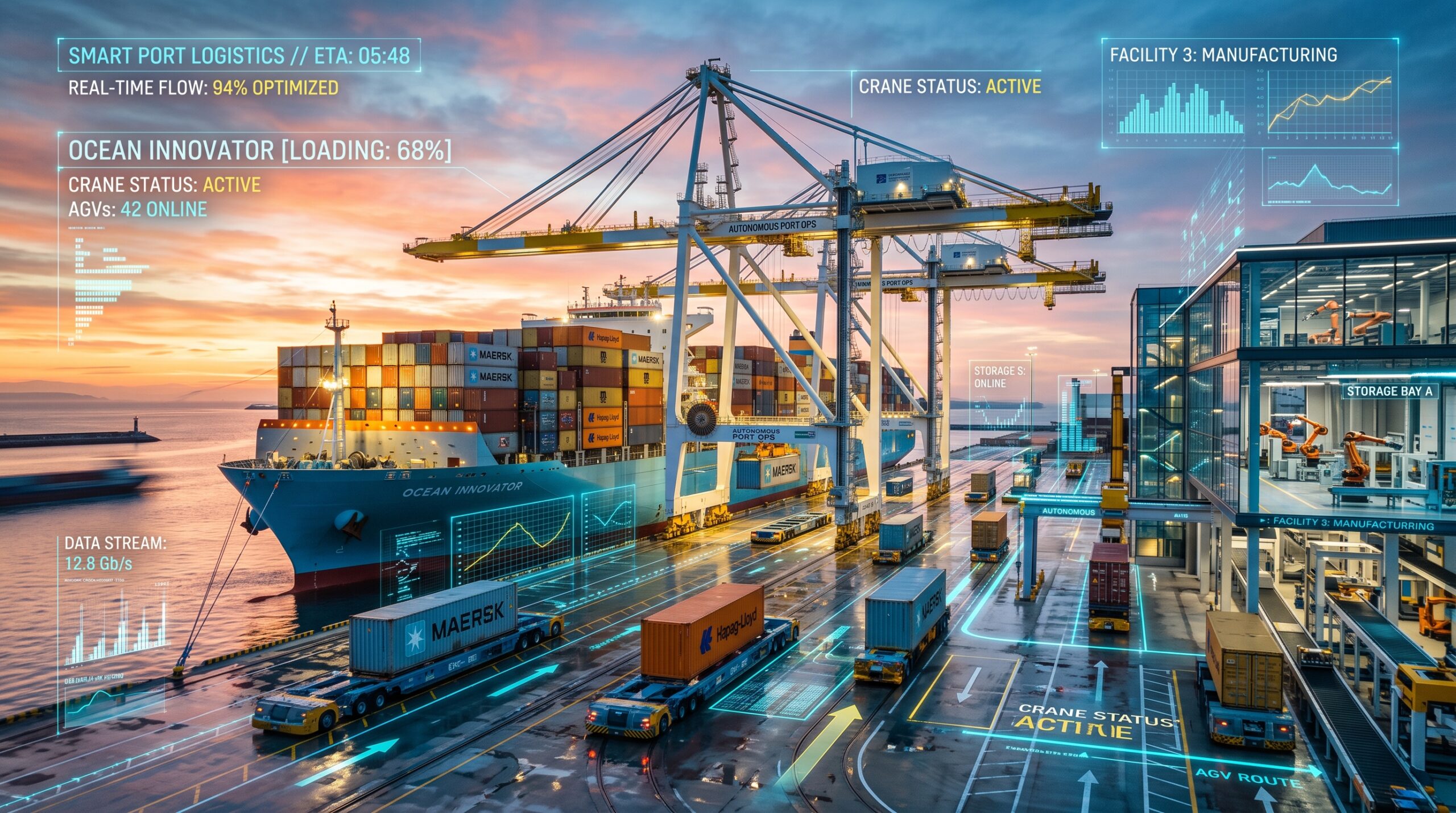
You watch global supply chains shift, economic fault lines fracture, and capital allocators relentlessly hunt for stability, wondering where the next great manufacturing miracle will take root. It is a high-stakes guessing game for modern investors trying to stay ahead of shifting trade pacts and rising operational overheads.
That persistent anxiety of chasing declining yields in saturated Western markets drives smart institutional money straight into dynamic emerging frontiers.
The traditional narrative that developing economies only serve as low-cost assembly lines is officially dead. Today, export-oriented industries are drawing unprecedented surges of foreign direct investment (FDI), reshaping industrial landscapes across Southeast Asia and beyond. Unpacking how cross-border capital targets export hubs, special economic zones, and high-value manufacturing unlocks a masterclass in modern wealth accumulation.
The Strategic Pivot Toward Export-Driven Economic Models
Moving Beyond Domestic Consumption Limits
To understand why global capital is flooding export-centric sectors, you must look at the structural limitations of domestic consumer markets in developing nations. While local purchasing power grows steadily, it cannot absorb the massive output of modern, automated assembly complexes, heavy processing plants, or specialized tech hubs.
By prioritizing export-oriented industrialization, host nations plug directly into global consumer demand, transforming local facilities into indispensable nodes of international commerce.
Why Global Investors Prefer Border-Spanning Operations
International corporations and institutional funds favor export-focused ecosystems for several compelling economic reasons.
-
Scale and Efficiency: Factories built for export leverage international economies of scale, producing high-volume goods that satisfy multinational corporate supply chains.
-
Macroeconomic Resilience: An export-oriented framework protects businesses from domestic economic downturns, as revenue streams derive from diversified foreign markets.
-
Alignment with Trade Agreements: Modern trade pacts and multilateral frameworks offer preferential tariff treatments, making regional production bases hyper-profitable.
Expert Insight: Think of export-oriented manufacturing zones as sovereign-neutral launchpads. Capital flows directly into regions where regulatory frameworks and trade agreements minimize friction between production lines and global consumers.
Special Economic Zones as Magnets for Foreign Capital
Engineering Industrial Ecosystems From Scratch
Pouring millions of dollars into a foreign country requires infrastructural certainty, reliable energy grids, and streamlined administrative processing. Governments answered this institutional demand by developing advanced Special Economic Zones (SEZs)—fenced, highly regulated enclaves equipped with world-class logistics and one-stop bureaucratic clearance.
These zones act as powerful vacuums, sucking up billions of dollars in foreign capital by eliminating the traditional friction points of international business setup.
The Core Advantages of SEZ-Based Manufacturing
Operating inside a dedicated economic zone provides distinct operational and financial leverage.
-
Tax and Duty Exemption: Most SEZs offer sweeping holidays on corporate income tax, alongside customs duty relief on imported machinery, raw materials, and components.
-
Integrated Logistics Infrastructure: Proximity to deep-sea ports, international airports, and arterial freight corridors drastically cuts down on supply chain turnaround times.
-
Streamlined Governance: Dedicated investment boards manage licensing, work permits, and compliance under a single administrative roof, bypassing slow municipal bottlenecks.
Diversification Beyond Garments: High-Tech and Heavy Industry Surges
Upgrading the National Industrial Complexity
For decades, foreign capital flowing into emerging export hubs was narrowly channeled into light textile assembly, garment production, and footwear manufacturing. While those foundational sectors remain vital, a massive structural evolution is currently underway.
Global conglomerates are deploying billions of dollars into higher-value ventures, introducing electric vehicle (EV) assembly lines, electronic component fabrication, car tire manufacturing, and heavy renewable energy infrastructure.
Key Sectors Dominating Modern Capital Inflows
Tracking where institutional investors deploy their capital reveals the future blueprint of international trade.
-
Automotive and Component Assembly: Plants manufacturing tires, wiring harnesses, and EV chassis are scaling up rapidly to serve regional and global automotive markets.
-
Renewable Energy Deployment: Capital is pouring into utility-scale solar and wind power installations to help export manufacturers meet stringent international green-energy supply chain mandates.
-
Agro-Processing Complexes: High-tech food processing facilities are transforming raw agricultural outputs into standardized export products ready for supermarket shelves worldwide.
Expert Insight: The transition from low-tech apparel to complex engineering and clean energy marks a permanent maturation of emerging export markets, elevating host economies up the global value chain.
Unpacking the Regulatory and Fiscal Incentives Fueling FDI
Rewarding Long-Term Industrial Commitments
Foreign capital is inherently risk-averse, moving only where government policy guarantees predictability, profit repatriation, and legal protection. Host governments seeking to dominate regional supply chains have engineered some of the most aggressive incentive packages in modern economic history.
These regulatory frameworks are meticulously designed to reward capital expenditure, technology transfer, and large-scale employment creation.
Core Legal and Tax Instruments Driving Inflows
Understanding these incentive structures helps institutional allocators maximize return on capital expenditure (CapEx).
-
Extended Tax Holidays: Multi-year corporate income tax exemptions shield early-stage manufacturing profits, followed by progressive phase-in tax rates over subsequent operational blocks.
-
Capital Equipment Duty Waivers: Complete exemptions on import duties for specialized production machinery, construction materials, and technological upgrades.
-
Guarantees Against Nationalization: Robust legal protections assuring foreign owners of asset security, transparent dispute resolution, and unrestricted repatriation of foreign currency profits.
Navigating Operational Challenges and Global Supply Shifts

The Realities Behind the Investment Headlines
While billions in registered foreign direct investment paint an extraordinarily optimistic picture, smart investors know that approved capital is vastly different from operational execution. Infrastructure bottlenecks, skills gaps in specialized technical labor, and shifting geopolitical trade regulations introduce complex operational variables.
Navigating these friction points requires rigorous due diligence, local partnerships, and adaptive facility management.
Mitigating Risks in Emerging Export Hubs
Sustaining profitability in high-growth export environments demands proactive risk mitigation strategies.
-
Investing in Workforce Upskilling: Partnering with local technical institutions to train machine operators and software-literate technicians closes the productivity gap.
-
Diversifying Supply Networks: Establishing secondary local sourcing channels for raw materials insulates production lines from global shipping shocks.
-
Monitoring Trade Compliance: Staying ahead of changing rules-of-origin guidelines ensures uninterrupted access to preferential tariff agreements.
FAQ
1. What drives foreign capital into export-oriented industries?
Foreign capital targets export-oriented industries to leverage competitive operational costs, tap into preferential trade agreements, utilize specialized infrastructure within special economic zones, and scale production directly for global consumer markets.
2. Why are Special Economic Zones (SEZs) important for foreign investors?
SEZs provide a business-friendly ecosystem featuring streamlined administrative approvals, tax exemptions, duty-free equipment imports, and reliable utility infrastructure, which significantly reduces the risk and cost of establishing foreign operations.
3. How has the nature of foreign direct investment changed in recent years?
FDI has evolved beyond traditional low-value light manufacturing like garments and footwear. Modern capital heavily targets higher-value sectors, including electric vehicle assembly, electronics, car tire production, agro-processing, and renewable energy infrastructure.
4. What role do government tax incentives play in attracting foreign investment?
Government tax incentives—such as multi-year corporate income tax holidays, duty waivers on production machinery, and enhanced deductions for worker training—significantly lower initial overhead costs and accelerate profitability for foreign investors.
5. What are the main challenges faced by foreign investors in export hubs?
Common challenges include local skills gaps requiring technical training, infrastructure bottlenecks during rapid industrial expansion, and the necessity to strictly navigate complex rules-of-origin criteria to maintain trade agreement benefits.
Conclusion
Export-oriented industries have transformed from regional manufacturing outposts into dynamic pillars of global economic growth, drawing historic waves of foreign capital. By leveraging specialized economic zones, sophisticated tax incentives, and evolving high-tech industrial ecosystems, host nations offer unmatched opportunities for forward-thinking investors. Audit your global asset allocation today, position your portfolio alongside these unstoppable trade flows, and capture the upside of the next industrial revolution.
Blog
This section provides an overview of the blog, showcasing a variety of articles, insights, and resources to inform and inspire readers.
-

The Lasting Influence of Jazz on Global Music Culture
You can go years without putting on a jazz playlist and still hear jazz everywhere.…
-

How Regional Food Traditions Continue to Shape American Identity
Order “barbecue” in one state and you get a vinegar-stained whole hog. Cross a state…
-
The Enduring Beauty of Cambodian Silk Weaving Traditions
You touch a length of hand-woven Cambodian silk, and the fabric instantly feels different from…



Leave a Reply