
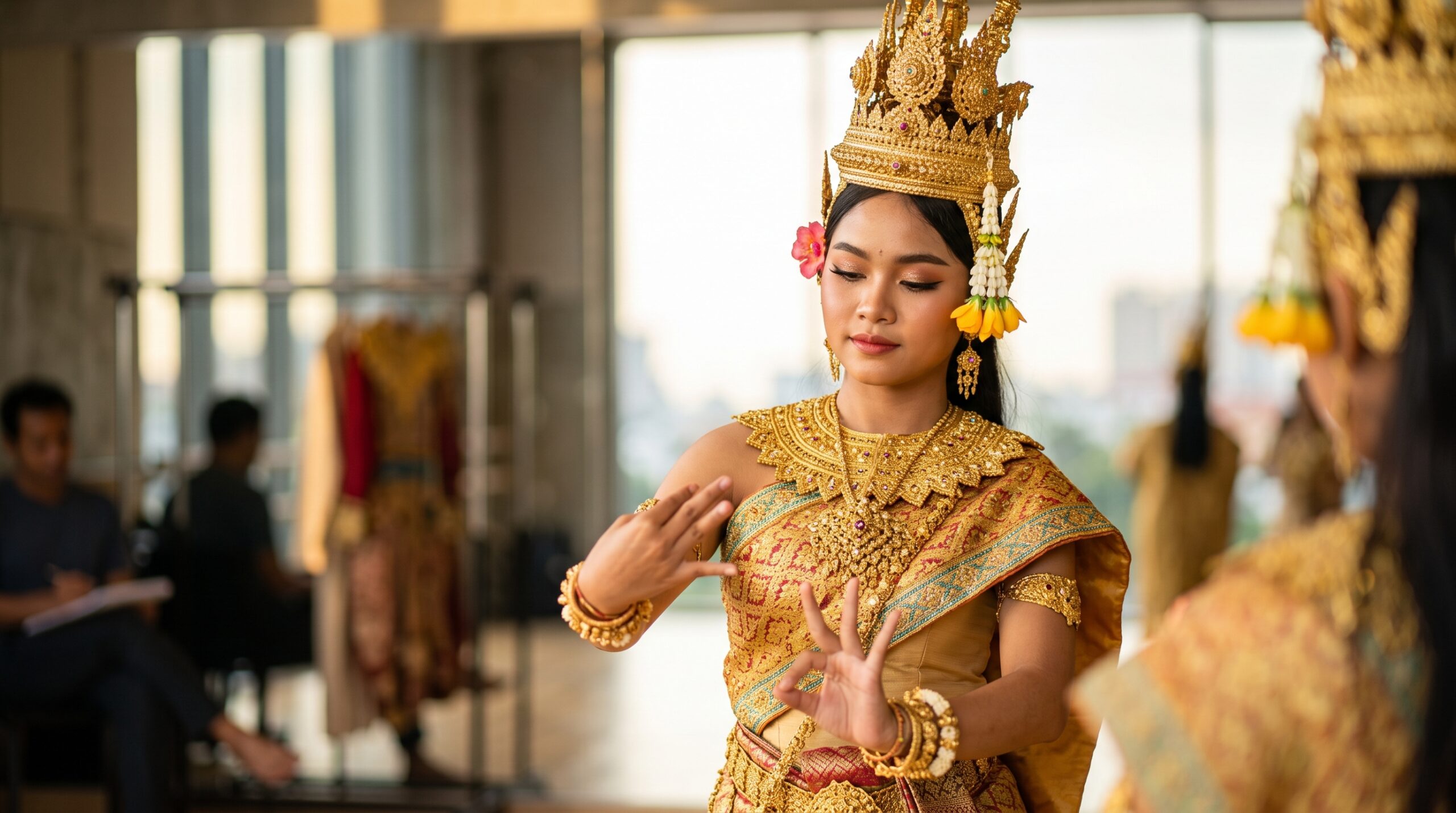
You step into a sunlit dance studio in Phnom Penh, where the faint, rhythmic chime of a pinpeat ensemble cuts through the afternoon heat, blending seamlessly with the tapping feet of teenagers in modern athletic wear stretching their fingers into impossible, backward-bending arches. It is a striking visual paradox for anyone who assumes ancient cultural traditions are slowly fading into dusty museum archives.
That persistent fear that globalization will wash away indigenous heritage misses the vibrant cultural renaissance happening across Cambodia right now.
While rapid modernization and digital distractions pull at the attention spans of youth worldwide, traditional Khmer dance is experiencing a powerful resurgence. A new generation of artists, choreographers, and digital-native students are breathing fresh life into century-old gestures. Unpacking how classical court choreography and regional folk dances are capturing modern hearts reveals a masterclass in cultural preservation and adaptation.
The Living Legacy of the Royal Ballet and Apsara Heritage
Tracing Movements Carved in Stone
To understand the deep emotional pull of Khmer dance, you have to look beyond the glittering gold crowns and silk costumes into its ancient spiritual roots. Classical Khmer dance—formally known as Robam Preah Reach Trop or the Royal Ballet of Cambodia—is a living link to the golden era of the Angkor Empire. The intricate hand gestures and hyper-controlled footwork mirror the celestial figures immortalized on the bas-reliefs of Angkor Wat.
For young Cambodians stepping onto the marley floor for the first time, learning these movements is an intensely spiritual act of reclaiming ancestral identity.
Why Classical Forms Still Resonate Today
Mastering classical repertoires like the iconic Robam Tep Apsara demands years of grueling, disciplined physical conditioning that builds deep mental resilience.
-
Rigorous Physical Architecture: Students spend hours perfecting hyper-extended fingers and arched backs, translating historical temple carvings into breathing, moving art.
-
Narrative Mythology: Dancers embody characters from the Reamker—the Cambodian adaptation of the Ramayana—connecting modern youth to classic epic literature.
-
The Weight of Resilience: Having narrowly survived near-extinction during the dark periods of the late 20th century, the art form carries an emotional gravity that inspires immense pride among young performers.
Expert Insight: Think of Khmer classical dance as a physical library. Every bend of the wrist and tilt of the head encodes centuries of mythology, philosophy, and national endurance that textbooks alone can never fully capture.
Folk Dances and Regional Traditions: Celebrating Community Roots
Beyond the Royal Court: The Pulse of the Provinces
While the Royal Ballet captures global headlines, Cambodia’s cultural tapestry is equally defined by its diverse folk dances. Unlike the highly stylized, slow-paced movements of the court, folk dances capture the daily lives, agricultural rhythms, and spiritual folklore of rural communities.
From the lively Trot dance that chases away bad luck before the New Year to the energetic bamboo-pole rhythms of rural harvest celebrations, these performances keep regional heritage alive.
Engaging Youth Through Energetic Storytelling
Folk traditions serve as an accessible entry point for teenagers and children who might find classical ballet too intensely rigorous at first contact.
-
Thematic Diversity: Dances portray hunting tales, wildlife interactions, and seasonal farming cycles, making them vibrant and fun to perform.
-
Community Cohesion: Local troupes in provinces from Mondulkiri to Pursat rely on youth participation to pass down indigenous instruments, songs, and choreography.
-
Festival Energy: Social dances like the Romvong and Saravan bridge generations during public celebrations, bringing elders and teenagers together in shared community circles.
The Digital Renaissance: How Social Media Amplifies Cultural Pride
Taking Ancient Art Forms to TikTok and Instagram
The most fascinating driver behind the resurgence of traditional Khmer dance is not found in elite state theaters, but on glowing smartphone screens. Young Cambodian creators are leveraging platforms like TikTok, YouTube, and Instagram to showcase backstage costume fittings, makeup tutorials, and high-speed rehearsal clips.
By fusing traditional aesthetics with modern digital editing, these content creators make cultural preservation look effortlessly cool to Gen Z audiences.
Leveraging Tech for Global Cultural Outreach
Digital media has democratized access to training, allowing youth outside major urban centers to connect with master instructors.
-
Virtual Tutorial Communities: Online instructional clips break down complex footwork into digestible segments for self-taught enthusiasts across the globe.
-
Viral Cultural Challenges: Hashtag campaigns celebrating traditional dance moves during national holidays spark widespread participation among school-aged youth.
-
Global Diaspora Connection: Young Khmers living abroad use digital platforms to reconnect with their roots, enrolling in virtual workshops and sharing their own practice routines.
Expert Insight: Social media has transformed traditional dance from an exclusive, elite performance art into an inclusive, participatory movement where every teenager can take pride in sharing their cultural heritage.
Institutional Support and Grassroots Training Initiatives
Building the Infrastructure for Future Generations
Passion alone cannot sustain a delicate, highly technical art form like Khmer classical ballet. Ensuring that traditional dance continues to captivate future generations requires robust institutional backing, dedicated funding, and structured educational pathways.
Organizations like the Royal University of Fine Arts and various non-profit cultural foundations work tirelessly to train the next wave of professional performers and instructors.
Key Pillars of Modern Dance Education
Establishing sustainable pipelines for young talent requires targeted mentorship and community-level engagement.
-
School-Based Programs: Integrating traditional dance modules into extracurricular school activities introduces children to the art form at an early, formative age.
-
Master-Apprentice Grants: Providing financial stipends to elderly master practitioners ensures they can pass down rare repertoire secrets to young disciples.
-
Public Performance Spaces: Expanding weekend open-air showcases in cultural hubs gives young artists vital stage experience in front of both locals and international tourists.
Facing Challenges: Balancing Modernization and Authenticity
Navigating the Tensions of a Fast-Changing World
Despite the encouraging wave of youth enthusiasm, preserving traditional Khmer dance comes with distinct modern hurdles. Economic pressures often force talented young dancers to abandon grueling rehearsal schedules in favor of corporate jobs or digital gig work.
Furthermore, striking the right balance between artistic innovation and strict classical authenticity sparks ongoing debates within the cultural community.
Strategies for Sustainable Cultural Evolution
Protecting the core integrity of the art while allowing it to breathe requires thoughtful leadership.
-
Balancing Career Viability: Creating better economic models and performance opportunities for professional dancers ensures they can make a sustainable living.
-
Respecting Classical Canons: While contemporary fusions attract younger crowds, master instructors emphasize the necessity of preserving foundational temple techniques unchanged.
-
Fostering Intergenerational Dialogue: Encouraging open conversations between veteran teachers and tech-savvy students bridges the gap between historical reverence and modern expression.
FAQ
1. What is the difference between Khmer classical dance and folk dance?
Khmer classical dance (Robam Preah Reach Trop) is a highly stylized court art characterized by slow, graceful, symbolic movements and elaborate royal costumes. In contrast, folk dances depict rural life, agricultural festivals, and indigenous folklore with faster, more energetic choreography.
2. Why is the Apsara dance so iconic in Cambodian culture?
The Apsara dance (Robam Tep Apsara) draws direct inspiration from the celestial dancer carvings found on the stone walls of Angkor Wat. Created in the mid-20th century under royal patronage, it serves as a universal visual symbol of Cambodian grace, identity, and historical pride.
3. How are young people in Cambodia learning traditional dances today?
Young people learn through a mix of formal institutions like the Royal University of Fine Arts, community-led provincial troupes, school extracurricular programs, and digital tutorials shared across social media platforms like TikTok and YouTube.
4. Is traditional Khmer dance recognized globally?
Yes. The Royal Ballet of Cambodia was officially inscribed on UNESCO’s Representative List of the Intangible Cultural Heritage of Humanity in 2003, cementing its global significance as a masterpiece of oral and intangible heritage.
5. Can tourists watch traditional Khmer dance performances in Cambodia?
Absolutely. Visitors can experience authentic classical and folk dance performances at various cultural venues, hotel dinner shows, and heritage sites—particularly in Phnom Penh and Siem Reap—throughout the year.
Conclusion
Traditional Khmer dance is far from a static relic of the past; it is a dynamic, breathing expression of national identity that continues to captivate new generations of youth. By blending rigorous classical discipline, energetic folk traditions, and modern digital outreach, Cambodian artists have secured a vibrant future for their ancestral heritage. Explore a local performance on your next visit, support youth cultural programs, and witness firsthand how ancient grace thrives in the modern world.
Blog
This section provides an overview of the blog, showcasing a variety of articles, insights, and resources to inform and inspire readers.
-
The Lasting Influence of Jazz on Global Music Culture
You can go years without putting on a jazz playlist and still hear jazz everywhere.…
-

How Regional Food Traditions Continue to Shape American Identity
Order “barbecue” in one state and you get a vinegar-stained whole hog. Cross a state…
-
The Enduring Beauty of Cambodian Silk Weaving Traditions
You touch a length of hand-woven Cambodian silk, and the fabric instantly feels different from…

Our Service Areas and Locations
This section highlights the key areas where we provide our services, offering a detailed overview of our reach and capabilities.

Location One
This location offers comprehensive services tailored to your needs.
Location Four
This location is dedicated to providing exceptional support and expertise.
Location Three
Discover the services available in this location to meet your requirements.

Location Two
This location specializes in delivering quality solutions for customers.


Leave a Reply